 Article written by: Bradley Jones – Business Leader Auckland
It’s finally here. Almost a century of thinking and making, delivering the City Rail Link (CRL) to Auckland — from the 1923 Morningside Deviation, through Robbie’s Rapid Rail in the 1970s, to today. I feel privileged and proud to have been involved in this world-class project in two periods, the formative years of the project during early design stages and then again in shaper end of delivery. Whilst I am proud of the work, I am also excited as an Aucklander for the transformation it will bring.
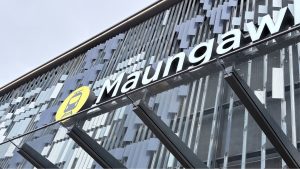
Dramatically increasing rail connectivity in Auckland as well as adding world-class new stations at Te Waihorotiu and Karanga-a-Hape and a transformed Maungawhau, CRL benefits western and southern commuters most, bringing Henderson and southern towns closer (in travel time terms) to the city centre. That was often misconstrued in the early days — CRL was read as a city-centre project, when the biggest gains land further out. In short, “it’s not a bloody loop”. As we often found ourselves saying.
More than the documented benefits, Auckland, as an international city, deserves the CRL. Working on the project at an early stage, we heard the amusing (and sadly true) story of “A Canadian student, with backpack, who approached a security guard at Britomart asking where the subway was. The security guard keenly directed him. The Canadian arrived and was confused to find a sandwich shop.”
Vitruvius has had a long and proud involvement in the project, dating as far back as the origin of the project, with a Vitruvian, Bryce Hourigan, sketching out the original alignment — which hasn’t changed much since. Alongside direct involvement, Vitruvius has played an important role in almost all the broader Auckland network readiness projects that support the CRL timetable, including Wiri to Quay Park (W2QP), Pukekohe to Papakura (P2P) & Rail Network Growth Impact Management (RNGIM) and Wiri Depot extension. Participating in a number of ways (Design, Survey, Engineer to Contract, Project Controls etc.).
My personal journey with CRL started when I arrived in New Zealand back in 2012, immigrating here from London and landing at Auckland Transport and joining the small project team managing City Rail Link. This was during the concept design stage, the notice of requirement, property acquisition, and then progressing, following the tender for a Principal Technical Advisor, to reference design and resource consenting, finally culminating in releasing early works packages. My role was leading the project controls and central project management function — heavily focused on budget management, procurement, and the commercial management of our contracts.
This three and a half year period was fraught with challenges, but it was great being part of a small team working with industry partners to progress the project during these uncertain times. From 2012-2016 the project was only partially funded (Auckland Council’s 50% committed in the long-term plan with drive from then mayor Len Brown). I say uncertain as we did not have a lot of confidence that central government would back the project, but we progressed on with our staged expenditure. For those who have not experienced this early-stage environment, the key lesson from my experience is that it is critical to progress with confidence, planning ahead as if the project is certain and funding will materialise (hiring international experts and resources, building systems and processes etc.). That said, the reality is often far more unsettling and tenuous than that.
I was fortunate to work under great leaders such as Clare Stewart, my first manager in New Zealand, Steve Hawkins, Chris Meale, and ultimately under Dave Warburton as then CEO of Auckland Transport. All of whom were working with Stephen Town, Len Brown and others, doing their best to drive the project forward and release this mega project. Speaking of lessons, this brings to mind just how important it is for major projects to have visionary, aligned and unrelentingly committed leadership to get these sorts of projects in motion,
The small project team, based above the new ferry building, grew as it needed to, ultimately moving back into Auckland Transport premises and then later into a dedicated project office where we worked with the Principal Technical Advisor to really drive the project forward to the Early Works Packages, as I mentioned before. The project really started to take off around the time we co-located into a dedicated project office, which certainly had a strong and positive impact on the team. These were good times and I enjoyed my time immensely. I gained considerable experience but more importantly it gave me a tremendous insight into the New Zealand engineering and construction industry.
I then took a role at Auckland Airport, a return to aviation industry for me, taking on an opportunity, I couldn’t look past. After 5 years or so (not long after Covid had put a significant dampener on our airport programme) I returned to the world of consulting and ultimately joined Vitruvius as Auckland Business Leader. I reconnected with a few friends and colleagues which lead me to support another great leader, Bevan Assink, in KiwiRail’s readiness for CRL (the CRL Be Ready and Be Involved programmes). Again, joining a small team, we began scoping and planning for all of the areas that KiwiRail would need to update, enhance and demonstrate to support the CRL Tunnel asset and the enhanced timetable as access provider. We ran this like a change programme, with 9 or 10 workstreams that supported its Safety Case Variation submission and testing programme. My role was again central project management and controls, trying to keep all the components integrated and heading in the right direction to hit the right deadlines required by Link Alliance, CRLL, Auckland Transport and Auckland One Rail. This sort of programme was not quite linear, and scope emerged and shrank in parallel to the shift that the rest of the KiwiRail business was making as it matured and changed in several areas. The task remained keeping our focus on primary outcomes and objectives, being flexible and driving hard in the right areas.
Alongside supporting the Britomart works programme with Stefan Jermy, I more recently became involved in the CRL testing and snagging programme — closer to the physical works. Both were great, and a fitting transition to the end of this major project.
All in all, it’s been a 14-year involvement in this project, probably my longest on single project, despite my experience on some major projects overseas, and one I am very proud of.
As of writing we are days away from public launch — CRL opens to passengers on Sunday 13 September 2026. I am very confident in the benefits of the CRL and the effect it will have in driving Auckland forward. As an Aucklander, I can’t wait.
See you on the train.